Achieving 55% Response Rates at University of Worcester with Explorance Blue
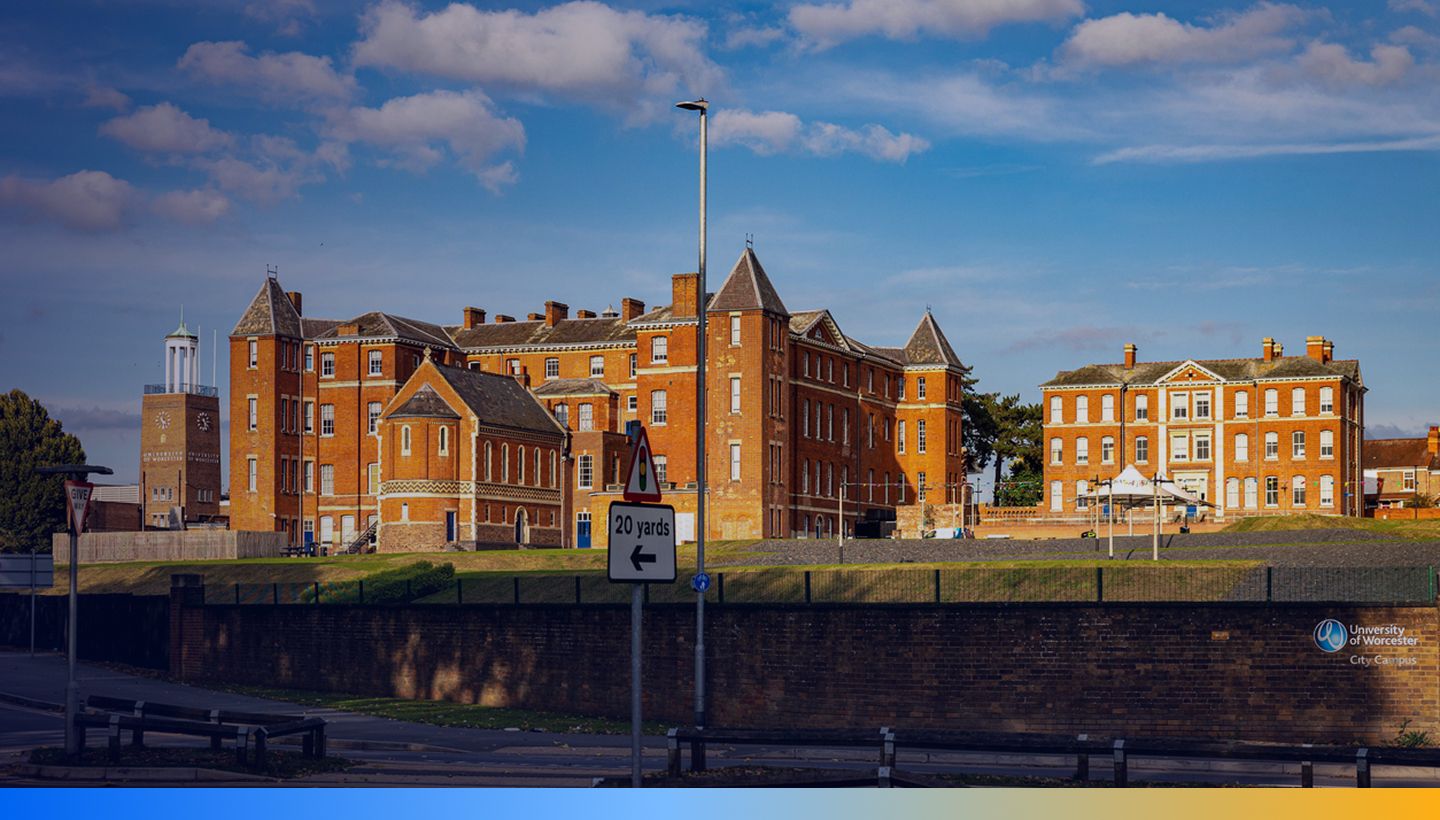

About the University of Worcester
The University of Worcester delivers degree programmes to approximately 10,000 students across eight academic schools. Worcester is the top multi-disciplinary university in the United Kingdom for sustained employment, further study, or both (Longitudinal Educational Outcomes 2017-2025) and was top in the UK for Quality Education in Times Higher Education’s University Impact Rankings 2025.
The Challenge: Overcoming limitations in traditional paper-based survey systems
In 2021, the University of Worcester appointed Explorance to provide student module evaluation systems and associated services, after the COVID-19 pandemic “crystalised the need to have a strong online presence in surveys”.
“Like a lot of institutions we had multiple survey platforms with a main platform that was historically very paper-based with limited access to data and a lot of manual spreadsheets and CSV uploads,” said Head of Student Evaluation & Enhancement Carolyn Moir. “We did not have a lot of live data, and therefore not a lot of ownership from users and students, because the surveys and reports were not very visible. We also did not really have any closing the loop capabilities with very simplistic reporting in place.
“We were already looking at reviewing our survey platform when COVID hit, so pretty much overnight, we needed to go from two academic schools using some online elements to all our schools going online. It exposed some real challenges around access and participation in the survey process, so this started to shape my thinking about what we wanted to do next in terms of reviewing our platform and how we wanted to approach survey management in the future.”
The Solution: Implementing an integrated survey solution with Explorance Blue
The University issued a tender focusing on improving the user experience and data value.
“Initially, our goals were to move to a much more seamless and integrated solution to give academic schools a lot more input in terms of managing their surveys, ownership of the process, and ultimately to have better data,” Carolyn revealed. “The other thing we wanted to do was improve communication with staff and students on surveys and focus on our closing the loop capability. Previously this was very manual and outside the survey system so it relied on people doing something and feedback getting back to the students. We wanted that single point of truth, so people know that if they want their information on their surveys, they can see exactly where to go as it is all held in one place.”
The intention was to move away from A “largely invisible process” to something a lot more transparent and easier to manage. Carolyn explained: “To do that we had to integrate the chosen solution into our student record management system, SITS, VLE, Blackboard Ultra, and portal solution, MyDay. We also wanted to create a feedback dashboard so that we can have centralised reporting and access to that data over time. Explorance Blue does all of this, and they were our first-choice partner to go with.”
Early surveys started with a programme level feedback survey in October 2021, followed by an apprenticeship employer survey, and 450 module evaluations before January 2022. These helped set up an internal reporting structure aligned to staff roles, enabling course leaders to respond more quickly. “An immediate impact was that VLE students were able to access the survey straight away,” Carolyn said. “Before we had to rely on students clicking on a link in their email, so with the first survey we saw an improvement in response rates and picked up 1,000 more responses than we had in the previous year.”
By early 2023, progress continued. “Our response rates to our early feedback survey increased from 32% to 36%, our first semester module evaluations were 42% against 32% in 2022, and our semester one closing the loop reached 60%,” Carolyn revealed. “We also ran our module evaluation pilot with a couple of schools (using a single survey across the course rather than for each module) which brought a 30% overall response rate so far, with one pilot group achieving a 52% response rate. Again, the value of Blue is that over time it has allowed us to try these things out fairly easily.”
Carolyn added: “From a staff perspective, we quickly became able to provide results directly through Blue at the individual course level, rolled up at the school level and then at the overall university level, and we are able to provide those very quickly. Module leaders have ownership in terms of adding their own targeted questions through question personalisation, so they feel they are getting some valuable data for their own purposes as well as the general module questions. In 2026, a suite of surveys are managed in Explorance Blue: Course Check-in; Course Experience Survey; and End of Module Evaluations. Each survey has a specific purpose, provides insight throughout the student lifecycle and supports closing the loop.”
The Outcome: Rising response rates, rapid reporting, and closing the loop capability
Five years on, and the University’s partnership with Explorance strengthened, showing clear results: module feedback response rates rose from 29% in semester one of 2021-22 to an average of 49% today, and programme level surveys improved from under 30% to over 55%.
Implementation of Blue has allowed the following:
- Move from paper-based to online surveys.
- Improved data visibility and accuracy.
- Single point of access for staff and student.
- Results reporting by role.
- Implementation of closing the loop.
- Results reported directly to staff and students.
“From where we started to where we are now has been a really significant change,” Carolyn summarised. “It has definitely been a big project, and a huge evolution in how we use and manage our surveys. Our approach to reporting and insights allows rapid dissemination of results, and the student voice is visible across all levels of the University. Results are not just limited to academic staff, data visibility generates discussion, and outcomes drive enhancements. Explorance are a perfect partner.”
Related Case Studies





Learn more about Explorance's products, solutions, and the company.

'%3e%3cpath%20d='M5.83968%2010.4004L7.09855%2015.7752L1.29959%2021.5843L1.23852%2021.642C1.21137%2021.6692%201.18762%2021.6997%201.16047%2021.7235C0.481112%2022.4372%200.0747675%2023.3674%200.0127211%2024.3508C-0.0493254%2025.3343%200.236888%2026.3082%200.821155%2027.1016C0.885626%2027.1865%200.950095%2027.2713%201.01796%2027.3493C1.0306%2027.3649%201.0442%2027.3796%201.05868%2027.3935C1.16422%2027.5192%201.27755%2027.6382%201.398%2027.7497L1.4455%2027.7939L1.67624%2028.0246L9.14125%2035.4896L20.0334%2024.6043L5.83968%2010.4004Z'%20fill='white'/%3e%3cpath%20d='M13.1078%2039.4493L9.78247%2042.761L15.1539%2041.5055L20.98%2047.3113L21.0411%2047.369L21.1225%2047.4504C21.8375%2048.1288%2022.7681%2048.5345%2023.7517%2048.5965C24.7354%2048.6585%2025.7096%2048.373%2026.5041%2047.7897C26.5889%2047.7253%2026.6737%2047.6608%2026.7518%2047.5929L26.7959%2047.5522C26.9233%2047.4401%2027.0434%2047.3199%2027.1556%2047.1925C27.1709%2047.1795%2027.1845%2047.1647%2027.1963%2047.1484L27.4304%2046.9211L34.8954%2039.4561L23.9999%2028.5605L13.1078%2039.4493Z'%20fill='white'/%3e%3cpath%20d='M34.8921%209.76194L38.2072%206.45019L32.8358%207.70228L27.0199%201.89315L26.9588%201.83207C26.9317%201.80492%2026.9045%201.78117%2026.8808%201.75403C26.1658%201.07561%2025.2352%200.669967%2024.2515%200.607946C23.2679%200.545924%2022.2937%200.831473%2021.4992%201.41471L21.2515%201.61491L21.204%201.65902C21.0833%201.7643%2020.9699%201.87767%2020.8646%201.99833L20.8239%202.04245L20.5932%202.2664L13.1282%209.73141L23.9999%2020.6473L34.8921%209.76194Z'%20fill='white'/%3e%3cpath%20d='M47.1789%2022.1067C47.1181%2022.0204%2047.0524%2021.9377%2046.9821%2021.859L46.9414%2021.8149C46.8301%2021.6867%2046.7099%2021.5665%2046.5817%2021.4552L46.5376%2021.4145L46.3069%2021.1838L38.8419%2013.7188L27.9531%2024.6041L38.8419%2035.4928L42.157%2038.8046L40.9015%2033.4332L46.7073%2027.624L46.7683%2027.5663L46.8464%2027.4815C47.5267%2026.769%2047.9337%2025.8392%2047.9958%2024.856C48.0579%2023.8727%2047.771%2022.8992%2047.1857%2022.1067H47.1789Z'%20fill='%230050C1'/%3e%3c/g%3e%3cdefs%3e%3cclipPath%20id='clip0_6641_12689'%3e%3crect%20width='48'%20height='47.9966'%20fill='white'%20transform='translate(0%200.603516)'/%3e%3c/clipPath%3e%3c/defs%3e%3c/svg%3e)